What is FAS Grade Black Walnut?
Jan 07, 2023
what is black walnut
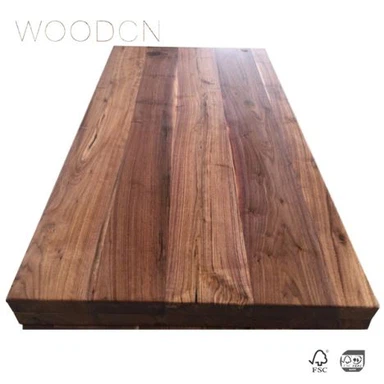
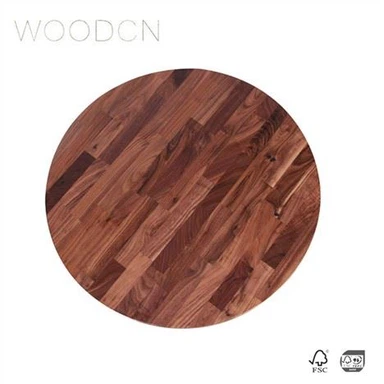
Generally speaking of black walnuts, we are talking about North American black walnuts. Black walnut has good physical properties and high appearance value. It is one of the more popular furniture materials now, and it is positioned as a mid-to-high-end wood.
Let’s first review some basic data of black walnut:
North American black walnut, black walnut
Origin: Eastern United States
Tree size: 30-37 meters high, 0.6-1 meter in diameter
Air dry density (12%MC): 510-610KG/M3
Hardness: 1010lbf
Modulus of rupture: 100.7MPa
Elastic modulus: 11.59GPa
Compressive capacity along the grain: 52.3MPa
Expansion and contraction: radial 5.5%; chord 7.8%
How is North American wood (plank) graded?
On many details pages selling black walnut furniture, it will be written that their materials are FAS grade, which leads to a series of questions: What is FAS grade? Are there other levels? How do they differ? In fact, the grade of North American black walnut is not a single measure of black walnut, but a standard of the North American wood industry. So, what you learned today can be used not only to measure North American black walnut, but also to measure other wood species in North America, but it does not apply to hardwoods outside of North America. Although this article will be a bit long, after reading it, you will basically be familiar with the meaning of these professional classifications and the meaning behind them.
First of all, this lumber standard is defined by a lumber industry organization called the National Hardwood Lumber Association (hereinafter referred to as NHLA). NHLA was established in Chicago in 1898. One of the important purposes of its establishment is to establish a unified lumber grading standard for the lumber industry. Its establishment helps to unify market standards, stop market chaos, and promote transactions between timber merchants and timber consumers, because the establishment of standards provides a basis for evaluating the quality of materials.
Ratings are based on the dimensions of the wood and the quality of the wood. Simply put, the higher the wood rating, the greater the length and width of the material and the fewer imperfections.
FAS-level
FAS evolved from the original rating First & Second, and is the most beautiful and expensive wood grade in the NHLA rating system. The specific requirements are: the board must be at least 8' long (about 244cm) and 6" wide (about 15cm); the minimum size of the flawless material that can be sawn out is 4"x5' or 3"x7', and the flawless area reaches 83.33% of the total area
F1F class
One side is FAS level, and the other side must meet the requirements of No.1 common level. Generally, manufacturers will mix and sell F1F grade and FAS grade materials at a ratio of 20%: 80% (specifically, each manufacturer is slightly different). The specific requirements are: the board must be at least 8' long (about 244cm) and 6" wide (about 15cm); the flawless material that can be sawn out has at least two small sizes, and one side is FAS-grade 4"x5' or 3 "x7'; One side is No.1 C grade 4"x2' or 3"x3', and there are two requirements for the flawless area to reach the total area, the good side must reach 83.33%, and the other side must reach 66.67% .
Selects
The requirements are basically the same as F1F grade, except that the size of the board is reduced to 6'x4". It is generally sold with FAS and F1F.
No.1 common (No.1 C)
A material grade with high cost performance, so the amount is also large. The specific requirements are: the board must be at least 4' long (about 122cm) and 3" wide (about 7.6cm); the minimum size of the flawless material that can be sawed is 4"x2' or 3"x3', and there is no flaw The area reaches 66.67% of the total area.
No.2 A common (No.2 AC)
This level of material is the most commonly used wood. It is cheaper and has a wide range of uses. For example, this level is used for flooring. The specific requirements are: the board must be at least 4' long (about 122cm) and 3" wide (about 7.6cm). The minimum size of the unblemished material is 3"x2', and the unblemished area reaches 50% of the total area.
Lumber Grading Summary
Wood grading in North America is based on the size of the material and the percentage of blemishes. The wider and longer the material, the greater the proportion of flawless materials, the higher the grade, and the higher the price. The specific grading has the requirements of size and flawless ratio, and the manufacturer will package and sell the wood according to these requirements.