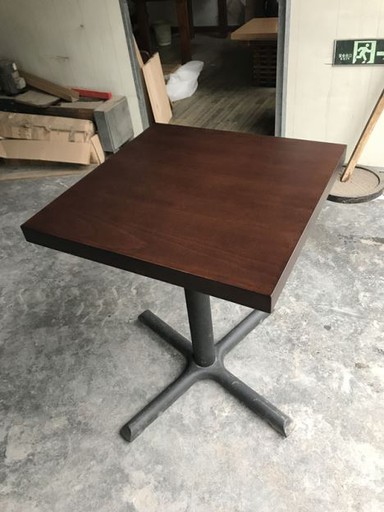
Precautions for purchasing solid wood coffee table
Jan 16, 2021
1. Look at the wood: see if the wood stubble has loops or arc-shaped pinholes (tube holes) that are regular, see if there are lines or curves divided into layers between the wood, if there are these, it is a man-made board (Veneer veneer), because the real wood does not have beautiful textures except rosewood and camphor wood.
2. Smell: Pure wood has its own special taste, even after long-term storage or painting, it still retains its odor, and there are many woods that will retain a light taste, such as pine wood has the taste of turpentine, cypress has a light fragrance, and cedar has a spicy Taste, sen wood has a unique smell, camphor wood will have a very obvious camphor smell, linden wood will have a slightly oily smell, the cut of mahogany will have a strong spicy aroma, walnut wood will have a slight choking nose, and many domestic woods No smell, wood-based panels will have a strong smell of chemical materials, such as formaldehyde, which is easy to identify.
3. Listen to the sound: The solid wooden pieces will make a crisper sound when tapped by hand, while the artificial board will have a low sound, and the wooden pieces in the box will make a drum sound.
4. Look at the weight: According to the weight of the wood, it is divided into three levels: light and heavyweights include dried paulownia wood, and medium and heavyweights include pine, basswood, and autumn wood. In northern my country, medium-density wood is called soft miscellaneous wood (except pine), and heavyweight wood, except for hardwoods such as mahogany, rosewood, red sandalwood, etc., is called hard miscellaneous wood, ash and birch, and imported Liuan wood. In summary, the wood coffee table mentioned above is lighter than the particleboard and medium density fiberboard coffee table.